
Study guide· 9 min read
ISA Arborist Study Guide: What to Use and an 8-Week Study Plan
ISA's official arborist study guide is the 4th edition book. Here's what else to use, how to split study time across the 10 domains, and an 8-week plan.
By PassArborist Editorial Team

Key takeaways
- ISA's official study guide is the Arborists' Certification Study Guide, Fourth Edition, available in print, digital and audio formats and in Spanish.
- ISA says no prep material, its own included, should be your only source. Pair the book with the free exam outline and with practice questions.
- Split your time by domain weight: Safe Work Practices (15%) and Pruning (14%) get the most hours, Urban Forestry (6%) the fewest.
- Finish with at least one full 200-question practice exam, timed to the real 3.5 hours, and review every miss.
The official ISA arborist study guide is the Arborists’ Certification Study Guide, Fourth Edition, which ISA sells in print, digital and audio formats. ISA itself says no single resource should be your only preparation, so pair the book with ISA’s free exam outline and with practice questions, and split your time by how much of the exam each domain takes up. The 8-week plan below, at 6 to 8 hours a week, covers all 10 domains and leaves time for a full practice exam.
If you still need the basics (format, fees, passing score), start with the ISA Certified Arborist exam guide. This page is about how to study for it.
The official ISA study guide
The Arborists’ Certification Study Guide, Fourth Edition, is written by Sharon J. Lilly, Corrine G. Bassett, James Komen and Lindsey Purcell and published by ISA. It comes in print, digital and audio formats and in a Spanish translation, and you can buy it from ISA or through ISA chapters. ISA describes it as a complete, up-to-date resource for people studying for the ISA Certified Arborist® exam (ISA Newsroom).
What the book is: the reference most candidates study from, covering the subjects behind all 10 exam domains, from tree biology and soils to safety and urban forestry.
What it isn’t: a schedule or a drill. It won’t tell you how long to spend on soil chemistry, and reading it doesn’t show you whether you can answer a question about it. ISA is also explicit that the book and the exam are separate: “Any educational or preparatory material, whether published by ISA or not, should NOT be considered the sole source of information for an ISA certification examination.” The two are developed through separate processes. So the book is the core of your ISA Certified Arborist exam study guide kit, not the whole kit.
What else ISA offers
The exam outline (free). The ISA Certified Arborist exam outline is the syllabus: every domain, its weight, and the tasks and knowledge areas the exam can test. Print it, and tick off each line as you cover it. It is also the best way to check whether a topic you’re reading about is likely to come up.
Practice exams (paid). ISA sells the Arborists’ Certification Practice Exam, a 200-question online exam, and Practice Exams 2, 3, 4 and 5, each with different questions. ISA credential holders can earn CEUs for completing them, which is useful later for recertification. One practice exam saved for the last week makes a good dress rehearsal.
Classes and prep courses
Some ISA chapters and colleges run exam prep classes, often a series of sessions that walk through the study guide domain by domain. They suit people who study better with a schedule set by someone else. Check your ISA chapter’s event calendar and local community colleges, and ask whether the course follows the current outline and the Fourth Edition.
How to split your study time by domain
Give each domain time in proportion to its share of the exam. The table below uses an example budget of 60 hours. That figure is ours, not ISA’s: ISA publishes no recommended study time, and you may need more or less depending on your experience.
| Domain | Weight | About how many of 200 questions | Hours of 60 |
|---|---|---|---|
| Safe Work Practices | 15% | 30 | 9 |
| Pruning | 14% | 28 | 8.5 |
| Tree Biology | 11% | 22 | 6.5 |
| Tree Risk | 11% | 22 | 6.5 |
| Tree Identification and Selection | 9% | 18 | 5.5 |
| Installation and Establishment | 9% | 18 | 5.5 |
| Diagnosis and Treatment | 9% | 18 | 5.5 |
| Trees and Construction | 9% | 18 | 5.5 |
| Soil Management | 7% | 14 | 4 |
| Urban Forestry | 6% | 12 | 3.5 |
| Total | 100% | 200 | 60 |
The weights come from the exam outline. Two things follow from them: the top four domains are just over half the exam, and the six smaller ones are still almost half. Neither group can be skipped.
An 8-week ISA arborist study plan
This plan works out to about 7 to 8 hours a week. Each domain week has the same routine: read the domain in the book with the outline beside you, answer practice questions on that domain, then go through every miss and its explanation until you could explain the right answer to someone else.
| Week | Domains | What to do |
|---|---|---|
| 1 | Tree Biology, Tree Identification and Selection | Start with biology: most other domains build on it. Learn terms by drawing the structures. |
| 2 | Soil Management, Installation and Establishment | Read soils first, then planting. Practice questions on both. |
| 3 | Pruning | Cuts, pruning objectives and systems, tools, ANSI A300 terms. A full week for the second-largest domain. |
| 4 | Diagnosis and Treatment, Trees and Construction | Diagnostic process, PHC and IPM; then tree protection zones and construction damage. |
| 5 | Tree Risk, Urban Forestry | Risk terms and the assessment process; then inventories, benefits and appraisal. |
| 6 | Safe Work Practices | ANSI Z133, electrical hazards, PPE, rigging, felling, emergency response. A full week for the largest domain. |
| 7 | All domains, mixed | Mixed-domain practice sets. Spend half the week on the two or three domains with the most misses. |
| 8 | Full practice exam, then review | One 200-question practice exam timed to 3.5 hours. Review every miss, reread weak areas, rest the day before. |
For the week 8 exam, use ISA’s practice exam or the app’s 200-question mock exam. The app’s mock exams aren’t timed, so set your own 3.5-hour timer and don’t pause it.
If you have 4 weeks
Plan on about 15 hours a week. This suits candidates with years of field experience who mostly need to fill gaps and learn ISA’s vocabulary. Take a diagnostic first, cover two or three domains a week (weeks 1 to 3), and keep week 4 for mixed practice and the full practice exam.
If you have 12 weeks
About 5 hours a week is enough. Follow the same order, but give each of the paired weeks its own week where you are weakest, and add a second full practice exam around week 10 so you can measure progress before the last one.
Adjust the plan to your background
Where you’ve worked shapes what you already know. These are tendencies, not rules, so check them against your own results.
- Climbers and removal crews often find Safe Work Practices and Pruning familiar, and the exam questions on them easier. Move hours toward Tree Biology, Soil Management, Tree Identification and Urban Forestry, which day-to-day crew work may not touch.
- Plant health care and municipal staff usually know diagnosis, soils and inventories well, and may have less hands-on time with climbing, rigging and felling. Give Safe Work Practices extra hours.
- Recent horticulture or forestry graduates tend to be strong on biology and identification and lighter on field safety and tree risk. Shift time to those.
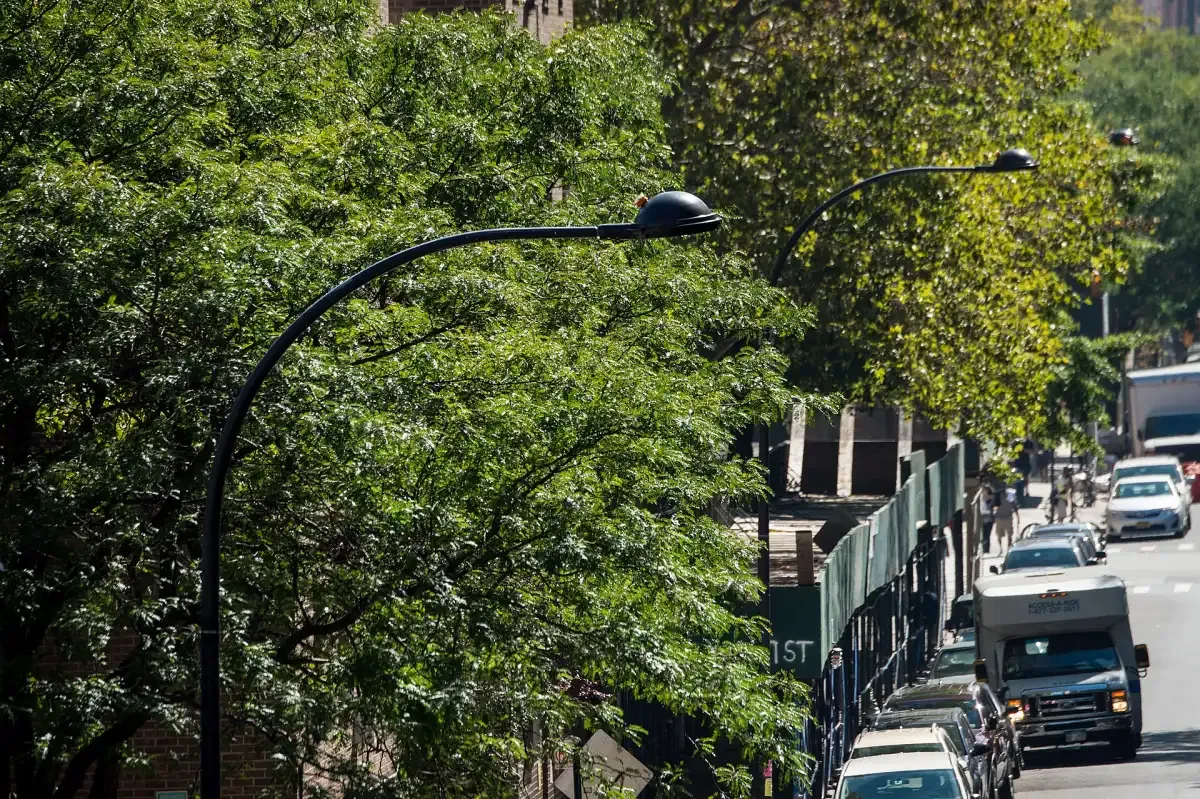 Photo: Lance Cheung, U.S. Department of Agriculture, via Wikimedia Commons (public domain).

The fastest way to find your own weak domains is to test before you plan. The free 20-question ISA arborist practice test covers all 10 domains, weighted like the exam, and takes about 20 minutes.
How to study each domain
| Domain | Best way to study it | Example from the outline |
|---|---|---|
| Tree Biology | Draw and label structures, then explain processes out loud | Compartmentalization of decay (CODIT) |
| Tree Identification and Selection | Flashcards with scientific names, plus a walk with a field guide | Leaf arrangement and twig features |
| Soil Management | Make a one-page sheet of soil terms and nutrient symptoms | Soil pH and nutrient availability |
| Installation and Establishment | Walk through a planting job step by step from memory | Planting depth and the root flare |
| Pruning | Sketch cut placements; learn the A300 pruning terms | Branch collar and types of cuts |
| Diagnosis and Treatment | Work through symptom-to-cause scenario questions | Plant health care and IPM |
| Trees and Construction | Work examples with real trunk diameters | Tree protection zones |
| Tree Risk | Scenario questions; learn the rating terms in order | Limited visual assessment |
| Safe Work Practices | Scenario questions; know the rules behind your crew’s habits | Minimum approach distance |
| Urban Forestry | Flashcards for terms; summarize each topic in a few lines | Tree inventories and appraisal |
For the construction domain, the DBH and critical root zone calculator lets you run the numbers on trees you work with.
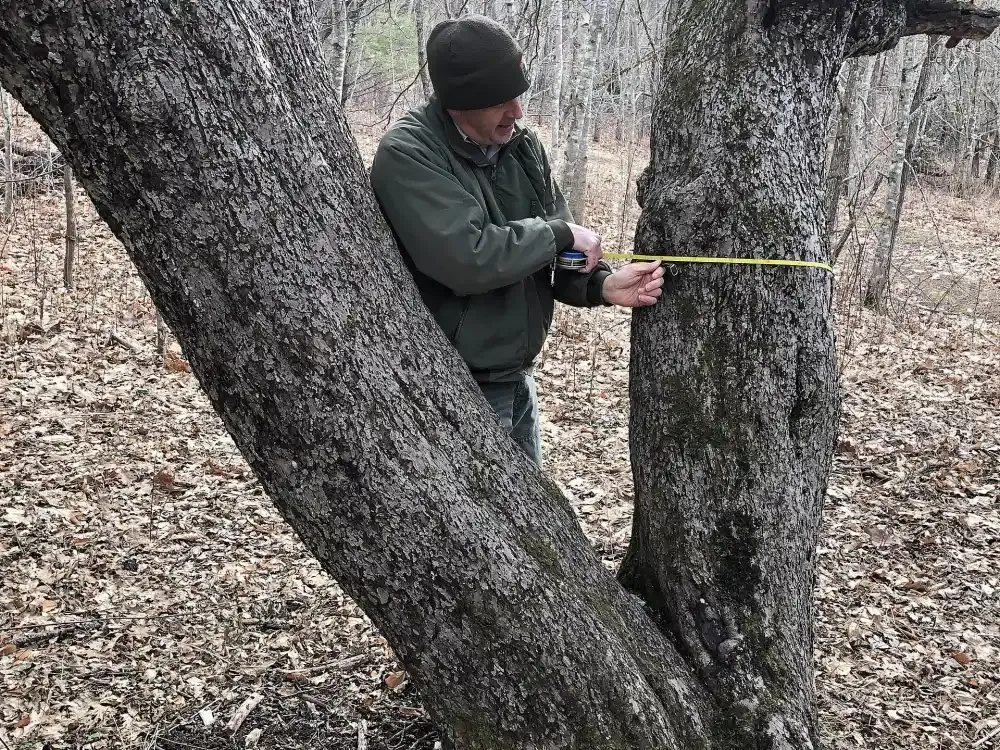 Photo: National Park Service, via Wikimedia Commons (public domain).

Flashcards, practice questions and mock exams
Reading the book feels productive, but recognizing a page isn’t the same as recalling the answer under exam conditions. Testing yourself, with questions or flashcards, makes you pull the answer out of memory, and that is the skill the exam measures. Some practical rules:
- Use flashcards for vocabulary: the exam relies on exact terms, and a short daily deck covers them in small doses.
- Answer practice questions after each reading session, not only at the end of the plan.
- Keep a list of missed questions and retry them a few days later, not right away.
- Read the explanation for every question you got wrong, and for the ones you guessed right.
To see how exam-style questions work in each domain, try the 10 sample ISA arborist exam questions with answers, then the free practice test for 20 more.
For daily practice, PassArborist is a study app for this exam, free on the App Store. It has 963 practice questions across all 10 domains, each with a written explanation, 286 key-term flashcards, 200-question mock exams and an AI tutor that explains any answer and takes follow-up questions. Pick a domain to match the week of your plan.
Mistakes to avoid
- Studying only what you do at work. Your job covers some domains in depth and others not at all. The exam weighs all 10.
- Skipping the small domains. Urban Forestry is only 6 percent, but that is still about 12 questions, and Soil Management adds about 14 more.
- Rereading instead of testing yourself. A third pass through a chapter teaches less than an hour of questions on it.
- Looking for a free PDF of the study guide. The book is ISA’s copyrighted publication. Buy the print or digital edition from ISA or a chapter, or borrow a copy from your employer, a colleague or a library.
- Trusting “test bank” files. ISA doesn’t release its exam questions, so files sold as the real exam aren’t ISA’s.
Frequently asked questions
Is the ISA study guide enough to pass the exam?
ISA says no single resource, including its own book, should be your only source of preparation. Use the study guide with the free exam outline and practice questions that show you which domains you’re weak in.
Which edition of the ISA arborist study guide is current?
The Fourth Edition of the Arborists’ Certification Study Guide, by Sharon J. Lilly, Corrine G. Bassett, James Komen and Lindsey Purcell. It is available in print, digital and audio formats and in Spanish.
How long should I study for the ISA Certified Arborist exam?
ISA doesn’t give a figure. Many candidates plan 4 to 12 weeks depending on their experience; the example plan above is 8 weeks at 6 to 8 hours a week. Take a diagnostic test first and adjust.
Is there a free ISA arborist study guide?
The exam outline is free from ISA and lists everything the exam can test. The study guide book isn’t free. This plan and the free practice test are free.
Can I get the ISA study guide as a PDF?
ISA sells a digital edition. Free PDFs of the book shared online are not authorized copies.
Does ISA offer practice exams?
Yes. ISA sells the Arborists’ Certification Practice Exam, a 200-question online exam, and Practice Exams 2, 3, 4 and 5, each with different questions. ISA credential holders can earn CEUs for completing them. For format and scoring, see the exam guide.
Written by
PassArborist Editorial Team
The team behind PassArborist, the ISA arborist exam prep app. Questions or corrections? Contact us.