
Exam guide· 9 min read
How to Become an ISA Certified Arborist: Requirements and Steps
Who qualifies for the ISA Certified Arborist exam, how to apply, what it costs ($419, or $335 for members) and how to keep your credential with CEUs.
By PassArborist Editorial Team

Key takeaways
- To qualify, you need 3 years of full-time arboriculture experience (ISA counts a year as about 1,795 hours), or 1 to 2 years plus a qualifying degree or assessment-based training program.
- You apply online with ISA and send proof of your experience. ISA reviews complete applications within 5 US business days.
- The application and exam enrollment cost $419 in total, or $335 for ISA members and credential holders. Each retake is $120.
- The credential lasts 3 years. You keep it by earning 30 CEUs and paying a $220 fee, or by retaking the exam.
To become an ISA Certified Arborist®, you need three years of full-time experience in arboriculture, or less if you have a qualifying degree or training program. You apply online with ISA and pay a $50 application fee ($40 for ISA members). Once you’re approved, you enroll for the 200-question exam ($369, or $295 for members) and pass it with a score of 76 percent. The credential lasts three years, and you keep it with 30 continuing education units (CEUs) and a $220 fee, or by retaking the exam.
Every rule and fee below comes from ISA’s Certified Arborist Program Guide, revised August 2025.
The 6 steps at a glance
- Check that you’re eligible: enough experience, or experience plus education.
- Gather your proof of experience and education.
- Apply online and pay the application fee.
- Enroll for a computer or paper exam.
- Pass the exam with 76 percent.
- Keep the credential with CEUs or a retake every 3 years.
Step 1: Check your eligibility
ISA asks for a minimum of three years of full-time experience in arboriculture, or a mix of education and experience. One year of full-time work counts as about 1,795 hours. These are the requirements as of the August 2025 Program Guide:
| Path | Education or training | Plus full-time experience |
|---|---|---|
| Experience only | None | 3 years |
| Associate degree | 2-year degree with at least 2 courses directly related to arboriculture | 2 years |
| Bachelor’s degree | 4-year degree with at least 4 courses directly related to arboriculture | 1 year |
| Assessment-based certificate | 900 hours of assessed training, at least 90 of them directly related to arboriculture | 2 years |
| Assessment-based certificate | 1,800 hours of assessed training, at least 180 of them directly related to arboriculture | 1 year |
| Registered or Industry Recognized Apprenticeship | ISA-approved programs may count as equivalent; you see the approved list when you apply | Depends on the program |
What counts as experience
ISA counts practical work using knowledge of pruning, fertilization, installation and establishment, diagnosis and treatment of tree problems, cabling and bracing, climbing, or other services directly related to arboriculture. Its examples of where that experience comes from include tree care companies, nurseries, landscape companies, municipalities, state forestry agencies, utility companies, consultancies, pest control providers (for advisors and applicators), arboriculture or horticulture departments (for instructors) and extension programs (for advisors).
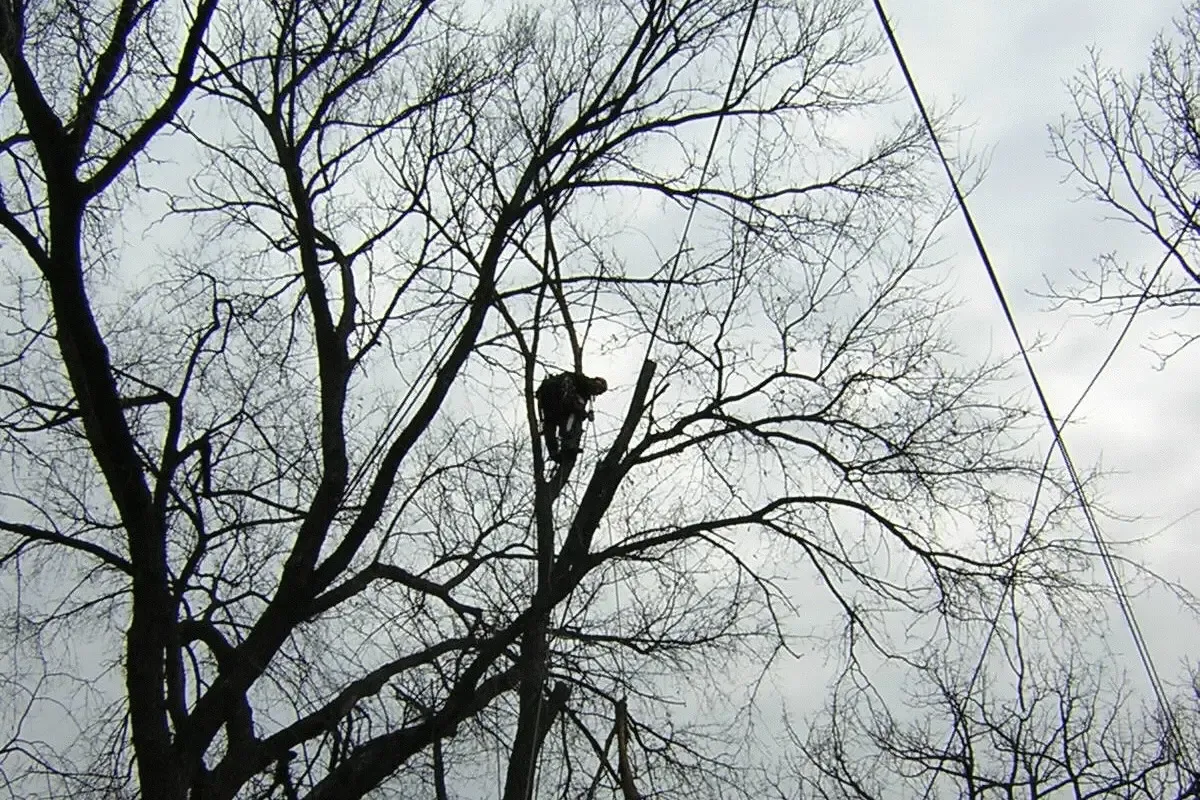 Photo: Susan G. Lesch, via Wikimedia Commons (public domain).

If you work part-time, the hours are what matter. As plain arithmetic, not an ISA ruling: 3 years at 1,795 hours is about 5,385 hours, so someone working 900 hours a year in tree care would need about 6 years to get there. ISA decides individual cases, so ask ISA before you apply if your hours are mixed or seasonal.
Combining education and training
- Two degrees can’t be added together to count as a longer program. An associate degree plus a second associate degree is not a bachelor’s.
- Assessment-based certificate programs can be combined to reach the training hours.
- The degree or certificate must be completed. Courses in progress don’t count.
- You submit a transcript that shows the course or training titles and the credit hours or hours of assessed training.
Step 2: Gather your proof
ISA requires documentation of your experience with the application, and it may contact the references you list. Have these ready before you start:
- Reference letters from current or previous employers that confirm your tree work and the dates.
- Volunteer work, if you count it: it must have been supervised, and you need documentation of your responsibilities and the hours you worked.
- If you’re self-employed or own your company: three references. These can be copies of invoices, contracts or business licenses, as long as they show the arboricultural work and the dates. ISA asks you to contact it about other forms of proof.
- For degree or training paths: a transcript with course or training titles and credit or training hours.
Step 3: Apply online
Log in or create an account at credentialing.isa-arbor.com. If you’re an ISA member or have bought from ISA before, you already have one. Find the ISA Certified Arborist credential and click “Apply Now”.
During the application, you review and accept the ISA Code of Ethics and the Credentialing Agreement and Release Authorization, upload your documents and pay the application fee: $50, or $40 for ISA members and credential holders.
Only complete applications go in for review. ISA reviews them within five US business days and emails you when you’re approved, or when it needs more information. Be exact: ISA can deny an application, or later revoke a credential, for false information.
Step 4: Enroll for the exam
Once your application is approved, you can enroll. The enrollment fee is $369, or $295 for ISA members and credential holders, the same for a computer or a paper exam. ISA doesn’t refund enrollments, and there is no walk-in registration.
- Computer-based, at a Pearson VUE test center. You get a 120-day window to schedule and sit the exam. You can reschedule for free within that window if you do it at least one US business day before your appointment. Moving outside the window costs $50, and a request for another 120-day period has to come in during your current one. Find a center with Pearson VUE’s ISA locator.
- Paper-based, through an ISA Certification Partner. Partners run exam events on set dates. Changes need at least 16 days’ notice and cost $50.
If you don’t schedule within the window or don’t show up, you forfeit the fee and pay the $120 retake fee to enroll again. The exam guide covers both options in more detail.
Step 5: Pass the exam
The exam has 200 multiple-choice questions, and you have 3.5 hours. You need 76 percent to pass. On a computer-based exam you see your result as soon as you finish, and formal results reach your ISA account within four weeks. If you don’t pass, you can retake the exam 30 days after your last attempt, for $120 each time.
The ISA Certified Arborist exam guide covers the 10 domains, scoring and test-day rules. To see the kind of questions you’ll face, start with the 10 sample exam questions with answers, then take the free 20-question practice test to find the domains that need work.
For the weeks between approval and test day, PassArborist is a study app built for this exam, free on the App Store. It has 963 practice questions across all 10 domains, each with a written explanation, plus 200-question mock exams, 286 key-term flashcards and an AI tutor that explains any answer.
Step 6: Keep your certification
Your ISA certification is valid for three years. To keep it, you recertify in one of two ways:
- Continuing education: earn at least 30 CEUs during the three years in topics related to the 10 exam domains, pay the $220 recertification fee and accept the Code of Ethics and the Credentialing Agreement again.
- Retake the exam and pass it.
CEUs come from ISA-approved education such as conferences, workshops, webinars and online courses. ISA’s own Practice Exams 2 to 5 also earn CEUs for credential holders, according to the ISA Newsroom. Track your CEUs from the start of each period rather than in the last few months.
What it costs in total
Fees as of the August 2025 Program Guide:
| Fee | ISA members and credential holders | Everyone else |
|---|---|---|
| Application | $40 | $50 |
| Exam enrollment (computer or paper) | $295 | $369 |
| Total to get certified | $335 | $419 |
| Retake (each attempt) | $120 | $120 |
| Reschedule outside the 120-day window, or any paper exam change | $50 | $50 |
| Recertification by CEUs (every 3 years) | $220 | $220 |
The lower fees come from ISA’s standard 20 percent discount for members and credential holders on the application and exam. Membership has its own cost, which depends on where you are. Study materials, such as ISA’s study guide or a prep app, are extra.
How long it takes
Experience is the long part. After that, the process takes weeks to a few months:
| Stage | Typical time | Source |
|---|---|---|
| Build eligible experience | 3 years full-time, or 1 to 2 years with a qualifying degree or training | Program Guide |
| Application review | Up to 5 US business days | Program Guide |
| Study | Your call; ISA gives no figure | |
| Sit the exam | Within your 120-day window (computer) or on a partner’s event date (paper) | Program Guide |
| Results | Immediate on computer; formal results within 4 weeks | Program Guide |
| Retake, if needed | 30 days after your last attempt, at the earliest | Program Guide |
Most candidates study for several weeks. Our 8-week ISA arborist study plan shows one way to split the time across the domains. A useful order: apply, use the review days to take a practice test, then enroll for an exam date that leaves you enough study time inside the 120-day window.
Is ISA certification worth it?
ISA says the credential shows peers and the public that you have a generally accepted level of knowledge in tree care, and that it makes you and your company more competitive with employers and customers. In practice, some employers, municipalities and utility contracts ask for an ISA Certified Arborist on staff or on the job, so it can open work that isn’t available without it. The CEU requirement also keeps you learning after the exam.
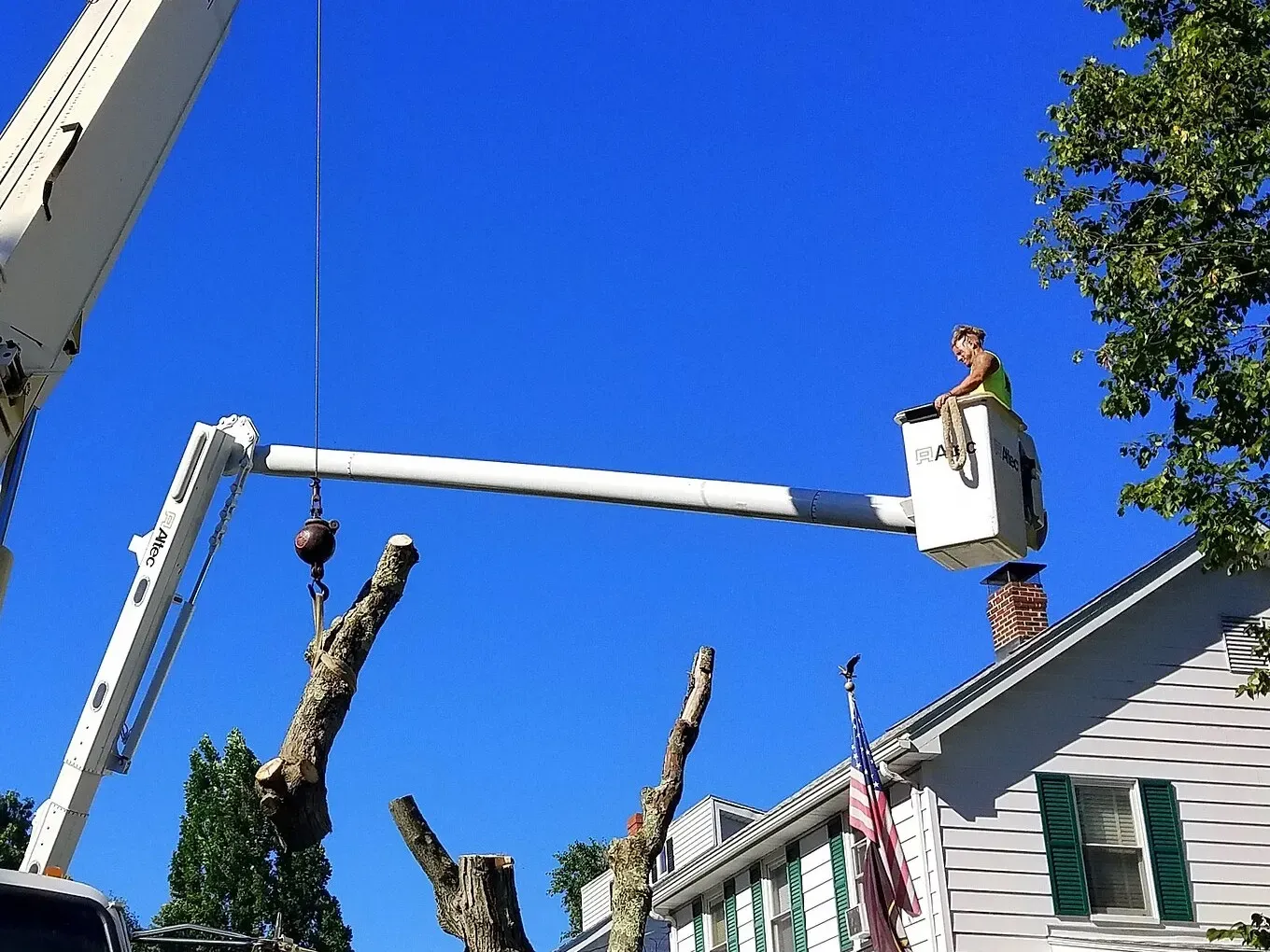 Photo: Daderot, via Wikimedia Commons (CC0).

What it isn’t: a license. The Program Guide says ISA certifications “do not represent licensure, registration, or other authorization to practice or to conduct business activities.” Certification is voluntary. Some states and cities license tree work or pesticide application separately, so check the rules where you work.
Frequently asked questions
How long does it take to become a certified arborist?
You need 3 years of full-time arboriculture experience, or 1 to 2 years with a qualifying degree or training program. After that, application review takes up to 5 US business days, and you have 120 days to sit a computer-based exam.
How much does it cost to become an ISA Certified Arborist?
$419 for the application and exam enrollment, or $335 for ISA members and credential holders. Study materials are extra, and each retake costs $120.
Can I take the ISA exam without a degree?
Yes. Three years of full-time experience in arboriculture qualifies you without any degree.
Does volunteer work count toward eligibility?
Yes, if it was supervised and you can document your responsibilities and the hours you worked.
I’m self-employed. How do I prove my experience?
Send three references with your application. They can be copies of invoices, contracts or business licenses that show the arboricultural work and the dates.
Is an ISA Certified Arborist the same as a licensed arborist?
No. ISA certification is voluntary and is not a license to practice. Some states license tree work or pesticide application separately. ISA also offers other credentials, such as Board Certified Master Arborist and Tree Worker, which this guide doesn’t cover.
How do I keep my certification?
Every 3 years, earn 30 CEUs in the exam’s 10 domains and pay the $220 recertification fee, or retake and pass the exam.
Where is ISA’s certified arborist handbook?
ISA calls it the Certified Arborist Program Guide. It’s a free PDF with the eligibility rules, fees and exam policies. For exam format and scoring, see the exam guide.
Written by
PassArborist Editorial Team
The team behind PassArborist, the ISA arborist exam prep app. Questions or corrections? Contact us.