
Career· 7 min read
How to Become an Arborist: Training, Licensing and Certification
Most arborists start on a tree crew. Here's how to get hired, learn to climb, choose training, check state licensing and earn ISA certification.
By PassArborist Editorial Team

Key takeaways
- You do not need a degree to start. Most arborists begin as groundworkers on a tree crew and learn to climb and run equipment on the job.
- A degree or an assessment-based training program shortens the experience you need for ISA certification. Without one, ISA asks for 3 years of full-time work.
- ISA certification is voluntary and is not a license. Some states, such as Connecticut and Louisiana, license tree work for hire, and most states license pesticide application.
- The BLS median pay for tree trimmers and pruners was $24.50 an hour in May 2025.
How to become an arborist, in short: most people start on a tree crew as a groundworker and learn to climb on the job, and no degree is required to start. A 2- or 4-year program, or an assessment-based training course, shortens the experience you need for the ISA Certified Arborist® credential, which most arborists earn after about 3 years of full-time work. Some states also require a license for tree work or pesticide application, so check the rules in your state.
This guide is for people who want into tree work, from high-school graduates and landscapers to career changers, and for ground crew working out how to move up.
The usual path, in 5 steps
- Get hired on a tree crew as a groundworker. This is the entry point for most of the trade.
- Learn the safety basics and get trained to climb, run an aerial lift or operate equipment, usually on the job.
- Add formal training if you want to move faster: a degree, an assessment-based course or an apprenticeship.
- Earn ISA certification after about 3 years of full-time experience, or 1 to 2 years with qualifying education.
- Specialize: production climbing, plant health care, utility line clearance, municipal forestry or consulting.
What an arborist actually does
An arborist cares for individual trees: pruning, removals, planting, diagnosing and treating pests and diseases, fertilizing and soil work, cabling and bracing, and assessing whether a tree is likely to fail. That list is close to how ISA defines qualifying experience in its Certified Arborist Program Guide.
The work happens in many places. ISA’s examples of employers include tree care companies, nurseries, landscape companies, municipalities, state forestry agencies, utility companies and consultancies. Early on, most of the job is outdoors and physical. With experience, some arborists move toward the office side: estimates, crew management, inventories, risk assessments and reports. Many of the numbers behind that work, like trunk diameter, root protection zones, tree height and log weight, are covered in our free field calculators.
Getting your first job on a tree crew
Many tree companies hire groundworkers with no tree experience and will train anyone who shows up on time and works hard. What crews tend to look for:
- Reliability. Early starts, every day, in heat and cold.
- A driver’s license. Crews move between job sites with trucks and chippers, and many employers ask for one; some help you get a commercial license later.
- Comfort with heavy, outdoor work. Hauling brush, carrying rope and gear, raking up after a removal.
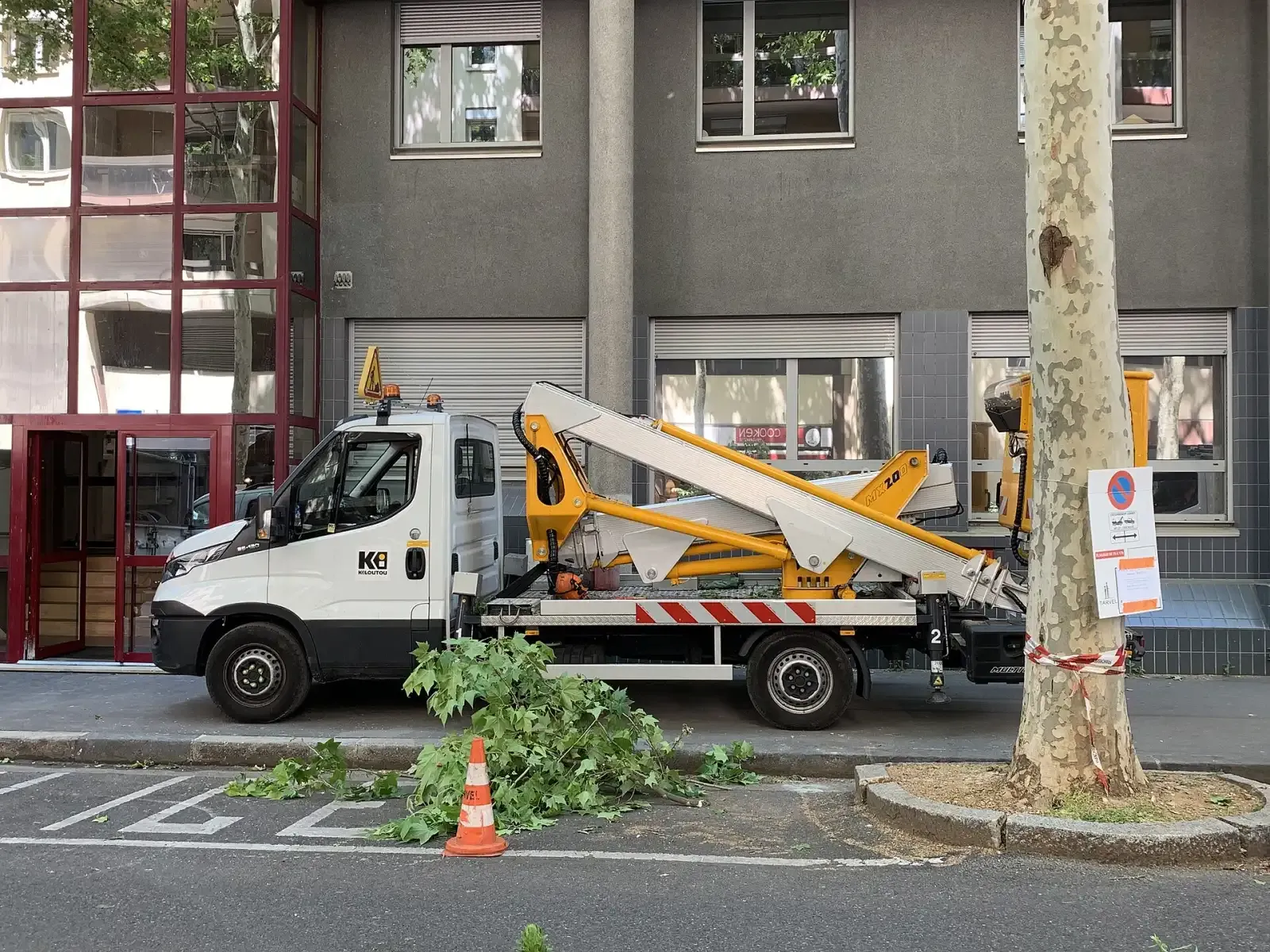
As a groundworker you drag brush, feed the chipper, run ropes for the climber, help lower and land pieces, and keep the drop zone clear. Watching good climbers from the ground teaches you a lot about how a job is planned.
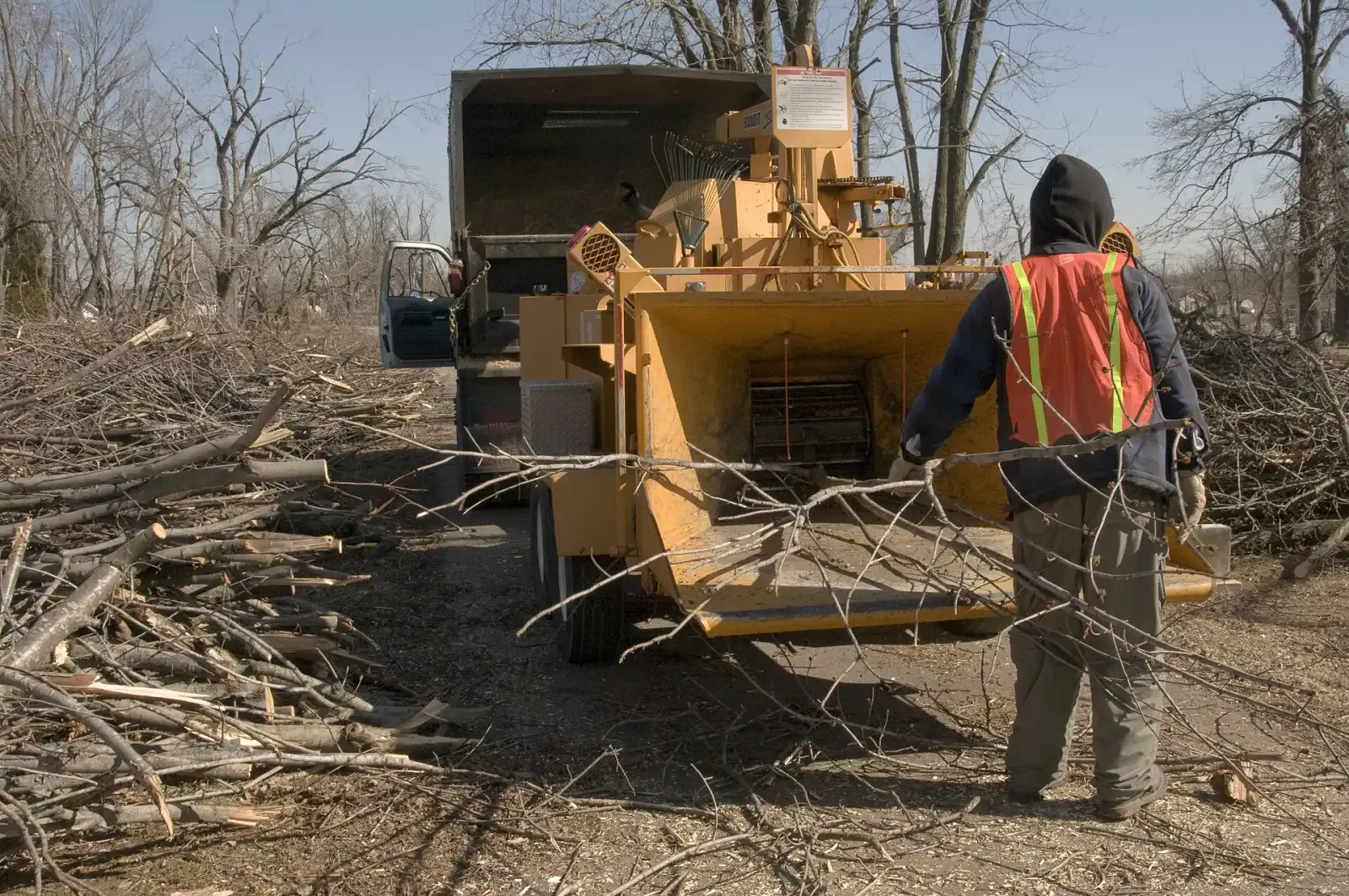 Photo: Liz Roll, FEMA, via Wikimedia Commons (public domain).

The move from ground to climbing usually happens through on-the-job training under an experienced climber, sometimes with a climbing school or a training course paid for by the employer. How long that takes depends on the company and on you, anywhere from a few months to a couple of years.
Tree work is dangerous, and mistakes hurt people. Reputable employers train to ANSI Z133, the American National Standard for safety in arboricultural operations. Learn climbing, rigging and chainsaw work from qualified trainers, not from videos.
Training options
You can become an arborist on experience alone. Formal training helps you learn faster, and it counts toward ISA certification.
Arborist schools and degree programs
Community colleges and universities offer associate and bachelor’s programs in arboriculture, urban forestry and horticulture. Look for programs with real field time and courses specifically about trees.
They count toward certification. Under ISA’s rules, a 2-year associate degree with at least 2 courses directly related to arboriculture reduces the experience you need to 2 years. A 4-year bachelor’s degree with at least 4 such courses reduces it to 1 year. The degree must be completed.
Arborist apprenticeships
Registered apprenticeships combine paid work on a crew with structured instruction. They are run by employers, trade associations and state programs, so availability depends on where you live. Ask local tree companies and your state’s apprenticeship office what exists near you.
ISA may count Registered Apprenticeship Programs and Industry Recognized Apprenticeship Programs toward eligibility for the exam if it has approved them. You see the approved programs when you apply.
Short courses and safety training
Assessment-based certificate programs (diplomas and certificates with assessed training) also count toward ISA eligibility: 900 hours of training, with at least 90 directly related to arboriculture, plus 2 years of experience; or 1,800 hours, with at least 180 related to arboriculture, plus 1 year.
For shorter safety and skills courses, training providers such as ACRT and the Tree Care Industry Association (TCIA) run courses for tree workers. TCIA also offers the Certified Treecare Safety Professional (CTSP) credential for people who lead safety programs. Compare what a course covers, who teaches it and whether your employer will pay for it.
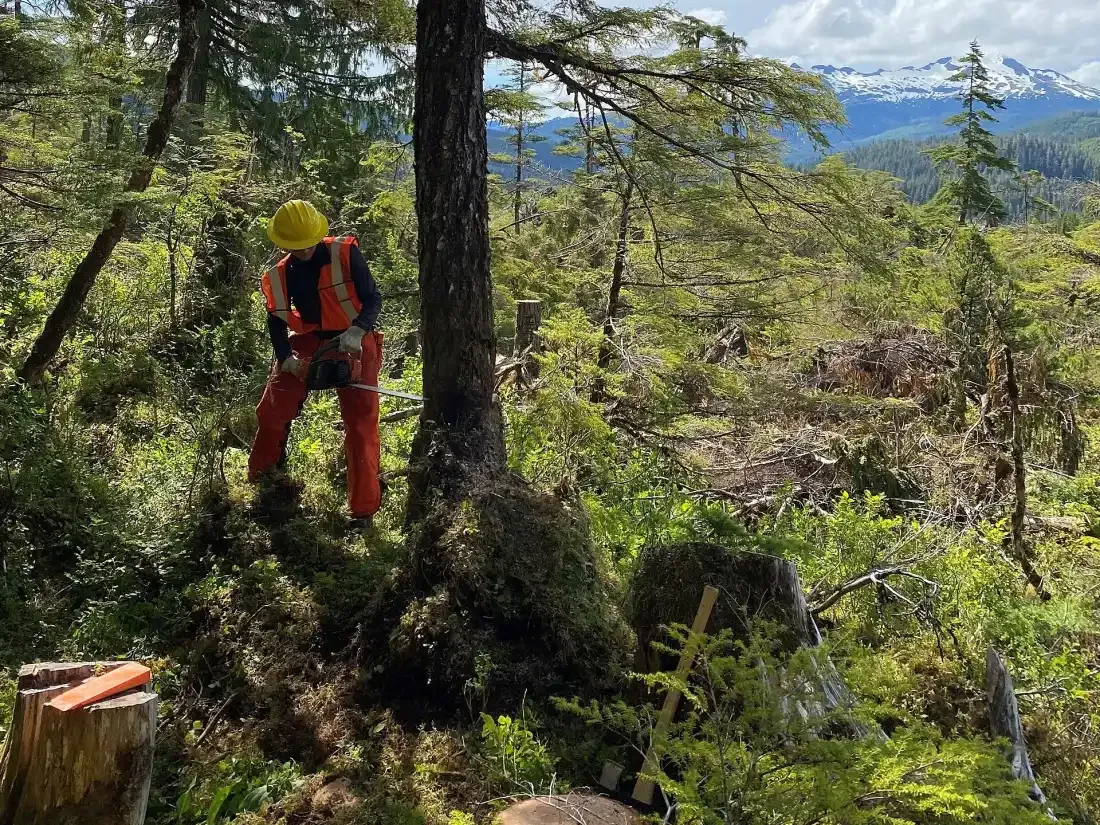 Photo: USDA Forest Service, Alaska Region, via Wikimedia Commons (public domain).

Do you need a license to be an arborist?
Not nationally, and ISA certification is not a license. The Program Guide is explicit: “ISA certifications do not represent licensure, registration, or other authorization to practice or to conduct business activities for a fee or otherwise.”
Some states do license tree work. Two examples, checked on official state pages on November 2, 2026:
- Connecticut: “An arborist license is required for persons advertising, soliciting or contracting to do arboriculture in Connecticut” (Connecticut DEEP).
- Louisiana: “Arborist licenses are required if you work on trees for a fee” (Louisiana Department of Agriculture and Forestry).
Other states have their own rules, and this is not a complete list. Pesticides are a separate matter: according to the Bureau of Labor Statistics, most states require licensing for workers who apply pesticides, which covers a lot of plant health care work. Cities and utilities can add their own requirements too. Before you start your own business or take on spraying, check with your state’s department of agriculture or forestry.
How long it takes
- Starting: right away. You can be on a crew the week you’re hired.
- Climbing: often within months to a couple of years, depending on the employer and the training.
- ISA certification: after 3 years of full-time experience (ISA counts about 1,795 hours a year), or 1 to 2 years with a qualifying degree or training program.
How to become an ISA Certified Arborist walks through the eligibility rules, documents and fees once you get close.
What arborists earn
The Bureau of Labor Statistics reports a median wage of $24.50 an hour for tree trimmers and pruners in May 2025 (BLS Occupational Outlook Handbook). That is the midpoint for the occupation: half earned more, half less.
Pay varies a lot by region, by role (groundworker, climber, crew leader, plant health care technician, consultant) and by credentials and licenses. Experienced climbers and people who can run crews or write risk assessments usually move above entry-level rates.
Getting ISA certified
ISA Certified Arborist is the core credential ISA offers for working arborists. It shows you’ve met ISA’s experience requirements and passed an exam covering everything from tree biology and soils to pruning, tree risk and safe work practices. The exam has 200 multiple-choice questions, takes 3.5 hours, and you need 76 percent to pass. The exam guide covers the format and domains, and the certification guide covers eligibility, the application and costs.
You don’t need to wait for year 3 to start learning the material. Try the free 20-question ISA arborist practice test to see what the exam covers and where your field experience already gets you. When you’re ready to study properly, PassArborist is a study app for the exam with 963 practice questions and explanations across all 10 domains, free on the App Store.
Frequently asked questions
Do you need a degree to become an arborist?
No. You can start as a groundworker with no degree, and 3 years of full-time experience alone qualifies you for ISA certification. A degree shortens that to 1 or 2 years.
How long does it take to become an arborist?
You can start on a crew right away. ISA certification usually takes 3 years of full-time experience, or 1 to 2 years with a qualifying degree or training program.
Do you need a license to be an arborist?
There is no national license, and ISA certification isn’t one. Some states, such as Connecticut and Louisiana, require a license for tree work for hire, and most states require one to apply pesticides.
What is the difference between an arborist and a certified arborist?
Anyone working in tree care may call themselves an arborist. An ISA Certified Arborist has met ISA’s experience requirements, passed its exam and keeps up with continuing education.
Is there an arborist apprenticeship?
Yes, in some states and through some employers and trade groups. ISA may count approved Registered or Industry Recognized Apprenticeship Programs toward eligibility for the exam.
How much do arborists make?
The BLS median wage for tree trimmers and pruners was $24.50 an hour in May 2025. Pay varies by region, role and credentials.
Written by
PassArborist Editorial Team
The team behind PassArborist, the ISA arborist exam prep app. Questions or corrections? Contact us.